
Have you ever been told that someone’s first impression of you is that you’re ‘dumb’ just because your hair colour is blonde? Have you ever noticed someone crossing the street because you’re wearing a hoodie and you have tattoos? Or how about my all-time favourite, you’re tall, you must have played basketball in school. Prejudice is an attitude (usually negative) (McLeod, 2018). No, I don’t mean in ‘brat’ way, I mean it is a distinctive attitude which is made up of 3 different components- Affective (Our feelings and emotions)- Behavioural (The influence on behaviour) -Cognitive (Our belief). In short terms, we can call this ABC. Let me break it down for you in the eyes of a troll (I bet they are green),
A- I don’t like people who post provocative images
B- I will comment and tell this person my thoughts
C- I believe girls act this way for attention
Now my opinion,
A- I like to express myself through my body
B- I will do this by sharing my photos to promote self-love
C- I believe that empowerment comes from confidence
It is simply a preconceived opinion
The literature of this blog is all about the prejudice against people who promote self-love.
Now let’s think… Why do you wear the clothes you wear? The shoes? Should a tall girl just not wear heels because she already has height? Absolutely not. You wear them because you like them, it empowers you, it allows you to express yourself and show individuality. Unfortunately, this exposes us to people’s opinions and sometimes people can be mean.
A few years ago, I constantly found that I was always comparing myself to other girls. Not through personality but through looks. Looks have been seen to play a big part in your life. I’ll be honest with you, not only am I what you’d call tall for a girl, I used to be underweight and I had the biggest stick-out ears. I can just imagine your image of me in your head right now. That’s okay because that’s how I used to see myself. Just because they were my physical features, doesn’t mean there is anything wrong with them, they just didn’t make me feel confident. I was so done with feeling the way I did that I found my ‘MoJordie’ as I call it (the name being Jordie) and did what I could to feel more myself. I am now embracing my height, I am a comfortable weight and I decided when I was 17 to have plastic surgery to pin back my ears. I’ve never really opened up about how insecure I used to be because I used it to grow. Now I thrive in confidence. I’ve always been aware of my emotions and tried to use them to inspire others that have been where I used to be.
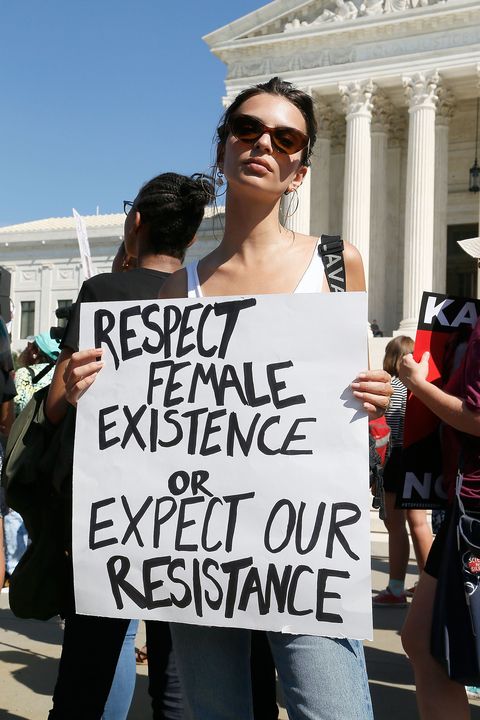
There have been many occasions where I have been a victim of discrimination when it comes to self-love. I am no longer ashamed to express myself, it has taken me a long time to change from who I used to be- an insecure girl who wouldn’t even leave her house unless I had to, into someone who just travelled the world alone. Sometimes to express myself means to sit in my yoga clothes, eat all the chocolate in the world and write. Yet sometimes it is to wear a more revealing outfit, maybe that’s a mini skirt or maybe even a tank top with no bra. Embracing your sex becomes powerful and therefor can threaten those with little self-confidence. A huge influencer and entrepreneur for myself is Emily Ratajkowski. Her self-concept and use of confidence in her body to promote feminism is so empowering. After receiving a handful of negativities from her part in the music video for ‘Blurred Lines’, Emily came more in the spotlight, she quickly detracted the concept of stereotyping by self-promoting and in her words to let the ‘preconceptions be damned’.

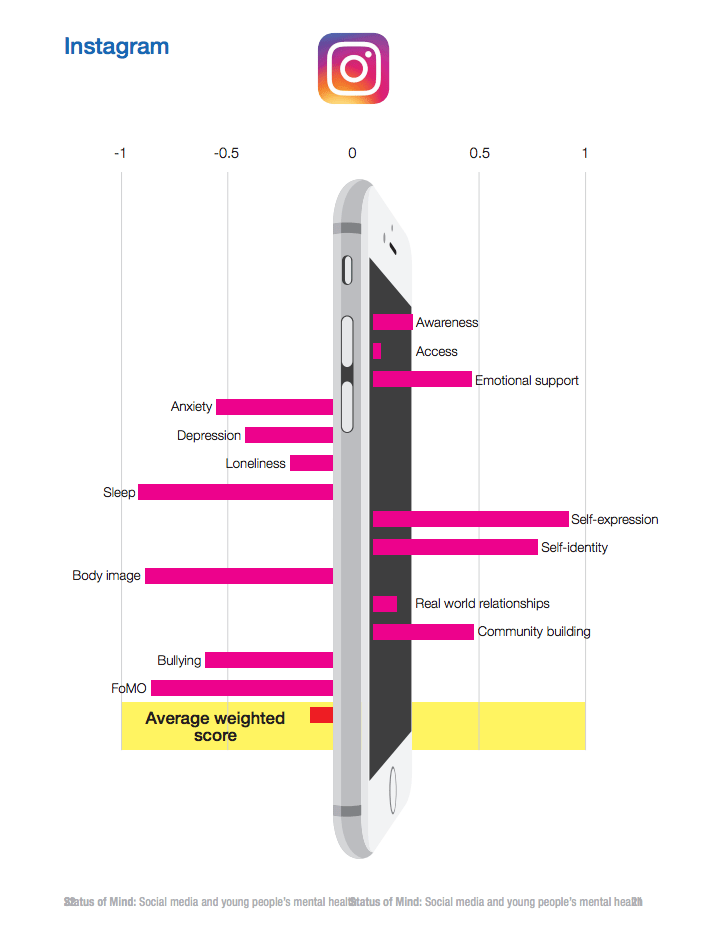
This prejudice is primarily down to stereotyping. Stereotyping is labelling a specific group/person due to an over-generalized belief (McLeod, 2015). Comments on someone’s post such as ‘you’re a slut’ create a negative response. This is just one of the ways that Instagram has negatively impacted society. With Instagram’s user growth, the platform now holds over 1Billion users (Constine, 2018). Not only have we seen a rise in account activations but an increase in anxiety, loss of self-worth and sadly in some cases suicide. With the horrifying figures, 70% of 18-24-year olds would consider getting plastic surgery (how terrifying is that) and 9 out of 10 girls are unhappy with their body (found on the NHS website). So how much of this is down to the ‘trolls’ (online users that post offensive comments to cause a negative response)? Trolls merely project their lack of self-concept to discriminate and create an image of which they perceive another person. Eventually, after someone is repeatedly discriminated against, it starts to become someone’s reality. This as a theory is called ‘the self-fulfilling prophecy’. It is when a person has been set expectations to behave in a certain way which in turn becomes true. Social media should a place where we can be ourselves and even promote body positivity instead of leaving us open to the experience of prejudice. This caused a division between the trolls and the posting user. This in psychology terms can be best describes as the ‘in-group’ and ‘out-group’. With the ‘in-group’ being the trolls, once one person starts to discriminate it makes it easier for people to conform and become a part of the group making it easy to distinguish someone in the ‘out-group’- the victim. The ‘social identity theory’ describes the out-groups as the people who discriminate to boost their self-image. Your choices do not need to be justified unless you are causing harm to yourself for another.
Just think about one thing before you comment, if you saw your younger self standing in front of you, would you call yourself nasty names then? Or how about your child?
Be more you. Because you are freaking awesome. I am Jordie and I love being me.
Tell me about a time you feel you may have been a victim of prejudice.
Who is your role model?
If you could tell your younger self something, what would it be?
REFERENCES-
Constine, J. (2018, June). Instagram hits 1 billion monthly users, up from 800M in september. Retrieved from techcrunch: https://techcrunch.com/2018/06/20/instagram-1-billion-users/
McLeod, S. A. (2008). Prejudice and discrimination. Retrieved from https://www.simplypsychology.org/prejudice.html
McLeod, S. A. (2015, Oct 24). Stereotypes. Simply Psychology. https://www.simplypsychology.org/katz-braly.html
 Preconceptions be damned